
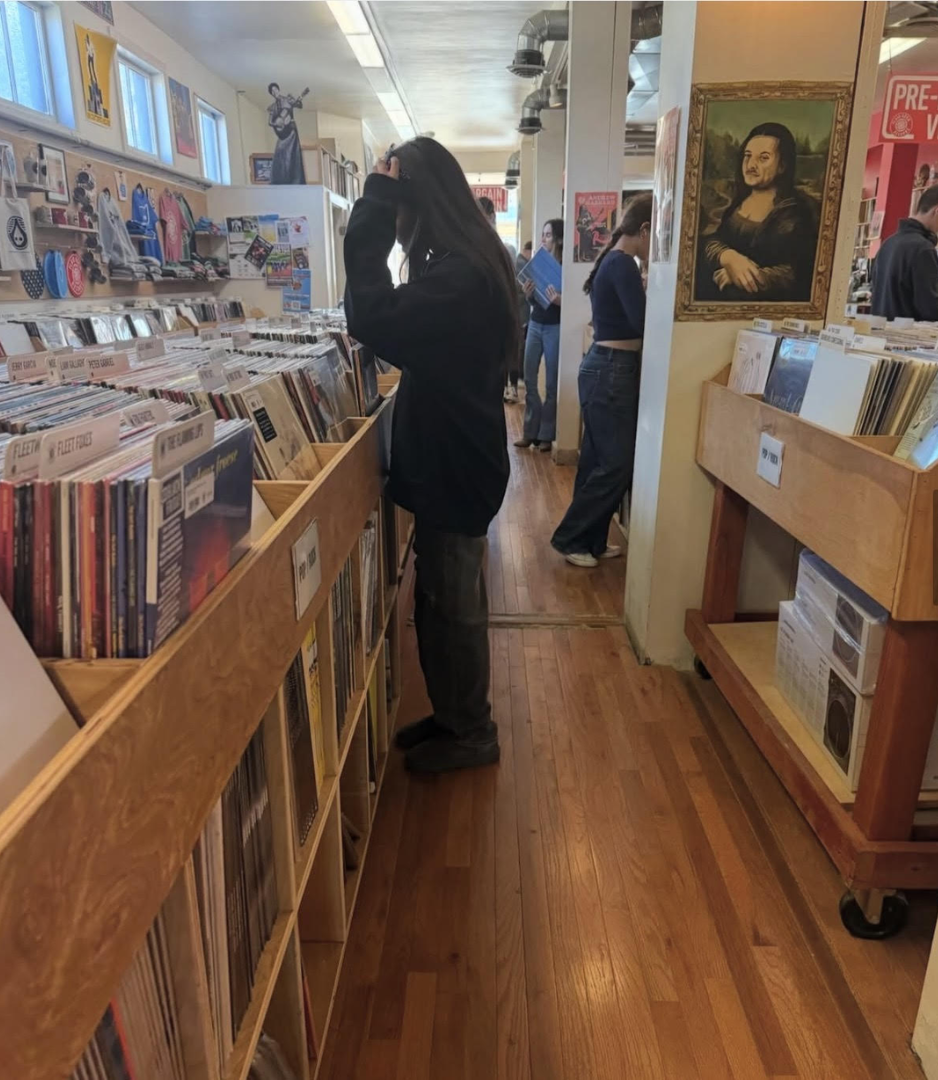

The needle drops. A crackle fills the room. Then, sound. Melodious and imperfect sound. In a world where a song can be skipped and forgotten in milliseconds, the deliberate act of playing a vinyl record has become, for a growing number of people, something approaching radical.
Despite the common misconception, nostalgia is not the driving force of this trend as most of the teenagers buying records today were not alive in the era that produced them. Instead, it is something more fascinating: a reaction—a reaction to the relentless, frictionless pace of digital life and a search for experiences that feel real, slow, and valuable.
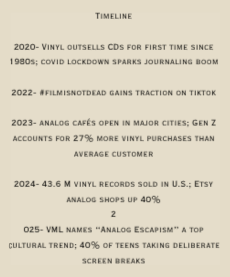
Vinyl record sales in the US reached 43.6 million units in 2024, according to data tracked by industry analysts. 43.6 million vinyls sold compared to 33 million CDs would have seemed absurd twenty years ago when vinyl format was essentially classified as dead. Today, it is certainly alive, and Gen Z accounts for roughly 45% of all purchases.
This shift extends beyond music to journaling, crocheting, needlepoint, reading, painting, photography, scrapbooking—anything that reminisces of the simpler times, anything that is tactile and held in your hands. According to Truffle Culture, analog objects are “artifacts of intention. They push back against the disposability of digital ephemera.”
Jade Times News named “Analog Escapism” as one of the defining cultural trends of 2025, describing it as “a deliberate embrace of non-digital, tactile experiences as a form of cultural resistance and emotional restoration.”
Psychologists have a name for what many teenagers are discovering by instinct: Attention Restoration Theory. Developed by environmental psychologists Stephen and Rachel Kaplan, the theory says that directed attention–the kind required for scrolling, decision-making, and resisting distractions–is a finite resource. When it is decreased, people experience what researchers call ‘attention fatigue:’ mental exhaustion, difficulty concentrating, and irritability.
Analog hobbies, engage a different and more restorative mode of attention. A person absorbed in knitting or developing film in a darkroom is not managing notifications or a feed. They are instead engaging in a fulfilling and creative activity that requires actual attention and focus, not just mindless absorption. According to a September 2025 report by Tunheim’s brand researchers, utilizing this kind of attention is “a coping mechanism for mental overload, a rebellion against algorithmic manipulation, and a reassertion of agency over attention.”
An additional part of what makes analog appealing, is a shift in how young people view and value ownership. Streaming platforms rotate content without warning. Files get deleted. Subscriptions expire. A vinyl record, a film photograph, a handwritten letter–these are things that cannot be disintegrated into the cloud.
The analog revival could be framed as a rejection of technology. It is not. The same teen using a disposable camera posts the pictures they take to Instagram. The vinyl collector streams music on Spotify while they drive. The journaler types up her pages on a laptop. Analog and digital are not opposites in this movement; they coexist. Analog is simply a counterweight to ultramodern digital advancement.
“The analog revival isn’t just a passing TikTok trend,” concluded Tunheim. “It’s a coping mechanism for mental overload, a rebellion against algorithmic manipulation, and a reassertion of agency over attention.”
This rising idea is a combination between the parts of digital life worth keeping and the parts worth putting down. It is not a total erasure, but enough of a collaboration between the two formats to allow the needle to find the groove.


